Woven vs Knitted Fabric: Read the Structure
What is the difference between woven and knitted fabric?
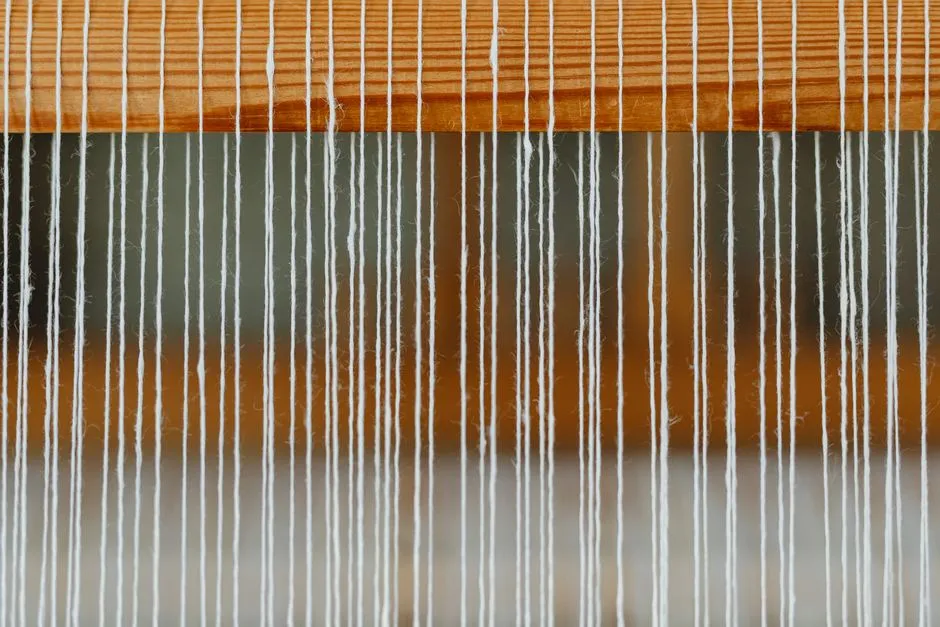
Woven fabric interlaces warp and weft yarns; knitted fabric is built from connected loops. Look for the yarn path rather than judging by stretch alone. Record uncertain observations instead of forcing an identification. Practise with ordinary samples you own; do not pull apart or treat an antique or fragile textile. Ask a textile conservator about those objects.
This is a source-based comparison for reading cloth, not a report of fabrics we tested. The aim is to describe what you see and choose the next question.
Which structural clue matters most?
The Textile Museum's structure guide distinguishes interlaced warp and weft from looping, including knitting. In weaving, warp yarns are held on the loom while weft yarns interlace with them.
| Construction | Structural clue | Useful next question |
|---|---|---|
| Woven | Warp and weft interlace | Which crossing pattern can I follow? |
| Knitted | Connected loops form the fabric | Can I follow the loop arrangement? |
| Unresolved | Yarn paths are not clear | What record or specialist could identify it? |
The comparison of plain weave, twill and satin takes the woven branch further.
What are courses and wales in knitting?
IIT Delhi's NPTEL course describes a wale as a lengthwise column of intermeshed loops and a course as a row of loops. It also distinguishes weft knitting from warp knitting. The word “warp” therefore appears in knitting terminology as well as weaving terminology; a name containing it does not, by itself, establish woven construction.
Use that vocabulary only where it clarifies an observation. A beginner's note can say “rows of loops visible” before attempting a more detailed classification. Keep the explanation alongside the photograph or sketch so another reader knows which feature prompted it.
Our EPI and PPI guide concerns woven-thread counts. Do not copy its headings onto a knit record and silently treat different structural units as identical. Begin with the construction, then choose the measurement question.
Can woven fabric stretch?
Yes. Cotton Incorporated describes its NATURAL STRETCH technology as a mechanical stretch construction for woven cotton, without synthetic fibres. This is a named example, not a promise about every cotton fabric or a recommendation to buy a particular treatment. It shows why “it stretches, so it must be knitted” is an unreliable shortcut.
For a purchase, ask the supplier for the construction and the actual material's specifications. If a project requires stretch, use that project's stated requirements and the supplier's relevant evidence. A broad category label is not the missing specification.
Is cotton woven or knitted?
Cotton names a fibre, not a construction. The Textile Museum's fibre guide identifies it as a plant fibre used for spinning into yarn. “What is it made from?” and “How is it constructed?” belong in separate fields of a description.
Copy a documented fibre label exactly rather than replacing it with a guess based on appearance. Where the label is absent, write “fibre unconfirmed.” You can still keep a useful record without completing every box. An honest blank is better than an identification that later gets repeated as fact.
How can you make a useful comparison record?
Here is our suggested notebook exercise. Use ordinary, sound practice samples with known labels or maker's notes. Keep the exercise observational: it does not require cutting, unravelling, burning or washing a sample.
Give each piece its own identifier. Record the source of any supplied description, then make a separate observation entry. Do not merge what someone told you with what you independently observed.
For an original fictional example, imagine a learner receives two labelled swatches and an unlabelled fragment. The learner writes:
| Record field | What to enter |
|---|---|
| Supplied description | Exact label or maker's wording; otherwise unknown |
| Observation | The feature examined, with a sketch or photograph reference |
| Interpretation | Proposed construction, clearly marked as provisional |
| Unresolved point | The specific question still needing evidence |
The unlabelled fragment need not receive a confident name to finish the exercise. “I cannot follow the yarn path in this area” is a useful result. Ask a teacher to explain that feature, or ask the supplier for the construction record, instead of requesting a verdict based only on the whole object's appearance.
Date later corrections and record what changed your interpretation.
When should examination stop?
The Smithsonian's handling guidance calls for planning before touching antique textiles, clean hands and a clean, flat examination surface. It advises documenting concerns and contacting a textile conservator instead of attempting improvised conservation. Do not use an heirloom as a practice swatch.
Follow the existing handling and storage guide for that separate care decision. Keep maker and community information attributed to its source; a structural observation gives you no authority to assign cultural meaning or permitted use.